Click 'Get Pricing and Information' to add this to a request. After submission, get a response within 3 business days.
Technology Readiness Level Acceleration Program - TR LEAP
SPS TR LEAP missions provide organizations with high-cadence access to real-world orbital conditions without the enormous capital expenditures and long wait times traditionally associated with space qualification programs. By integrating payload pick-up, spacecraft payload integration, launch access, operational monitoring and testing, payload recovery, and iterative mission cycles into a single platform, SPS provides a practical and cost-effective pathway for technologies to progress through critical TRL milestones with significantly greater speed and efficiency.
TR LEAP enables:
-
- Faster testing and qualification cycles
- Lower barriers to orbital validation
- More frequent flight opportunities
- Continuous hardware evolution and refinement
- Reduced deployment and operational risk
- Significant cost reduction
- The ability to return and re-purpose high-value assets to Earth
For developers of emerging orbital technologies, SPS offers a uniquely valuable capability: the ability to economically test, recover, analyze, improve, and rapidly fly again. This iterative development loop is the key to accelerating TRL advancement and reducing the time required to bring next-generation space technologies to market.
Repeatable, Reliable and Rapid path to TRL 9:
- Payload Delivery - Customer payload delivered to SPS
- Integration & Launch - Payload integrated on SPS spacecraft and launched
- Orbital Testing & data Collection - Operate in real space environment and collect performance data
- Payload Recovery - SPS returns payload safely to Earth
- Analyze, iterate & Accelerate - Analyze results, iterate design, and fly again sooner
- TRL 9 - Operational Deployement
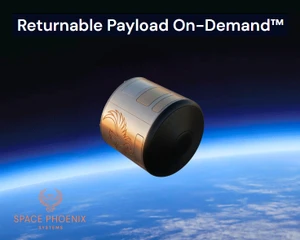
Space Phoenix Systems (SPS) has developed a fundamentally different model for space qualification and technology maturation. Rather than relying solely on one-time rideshare launches or expensive dedicated missions, TR LEAP offers a returnable spacecraft platform specifically designed to accelerate technology readiness through repeatable flight opportunities and post-mission payload recovery and return.
In summary, Space Phoenix Systems’ Technology Readiness Level Acceleration Program is helping bridge the critical gap between innovation and deployment — economically accelerating the commercialization of next-generation space systems and enabling faster advancement across the global space economy.
Space Phoenix Systems is now accepting reservations for its TR LEAP missions scheduled in 2028 through 2030.
| Parameter | Value |
|---|---|
| Total Spacecraft Mass | 250 kg |
| Operational Time in LEO | 7-10 days (up to 180 days) |
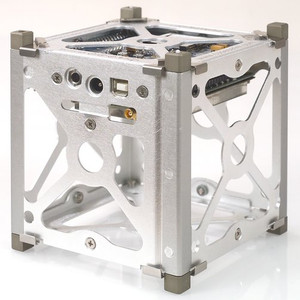
| Total Payload Volume Available | 30U (310 x 310 x 310 mm) Cube Volume |
| Total Payload Mass Available | 60 kg |
| Power | 350 Wh with 15 Wh recharge per orbit |
| Temperature | Platform range -20C to +50C with +20C average |
| Communication | Encrypted S-Band |
| Late Load | 30 days before launcher integration |
| Vantage Point Viewing | Optical or IR Camera in Payload Bay |
| Max G-Loading | No greater than 10 G |
| Payload Monitoring | Temperatures, Voltages and Currents, Radiation |
| Data Storage | 500 GB, data downlink available |
| Monitoring | White Glove payload service, rapid payload retrieval after de- orbit, cleanroom access |
| Type | Document Name | Action & Size |
|---|---|---|
| No public documentation available. Please inquire for details. | ||